
Hardeman County Recent Bookings Online
The Hardeman County Sheriff's Office in Quanah processes all recent bookings for the county jail. Every arrest in the county leads to the same intake facility, regardless of which agency made the stop. Hardeman County is a small North Texas county near the Oklahoma border where the sheriff in Quanah processes all bookings. This guide walks through how to look up booking records, what the legal process looks like after arrest, and which resources can help you find case information and legal aid in Hardeman County.
Hardeman County Booking Overview
Search Hardeman County Recent Bookings
The sheriff's office in Quanah is the sole booking authority for Hardeman County. All arrests in the county, no matter which law enforcement agency makes the stop, end up at the same jail for processing. Intake staff collect personal information, fingerprints, and a photo. They also log every charge and set up the initial record in the system.
To check on a booking, you can call the jail or visit in person during business hours. For online research, re:SearchTX is the primary free tool. It pulls from the statewide court records system and shows case data once charges have been filed. You type in a name and see matching cases with dates, charges, and current status. The booking record itself is held by the sheriff, but once a case enters the courts, the data is in re:SearchTX.
The Texas Government Code provisions shown below outline public access rights for booking records and other government data.
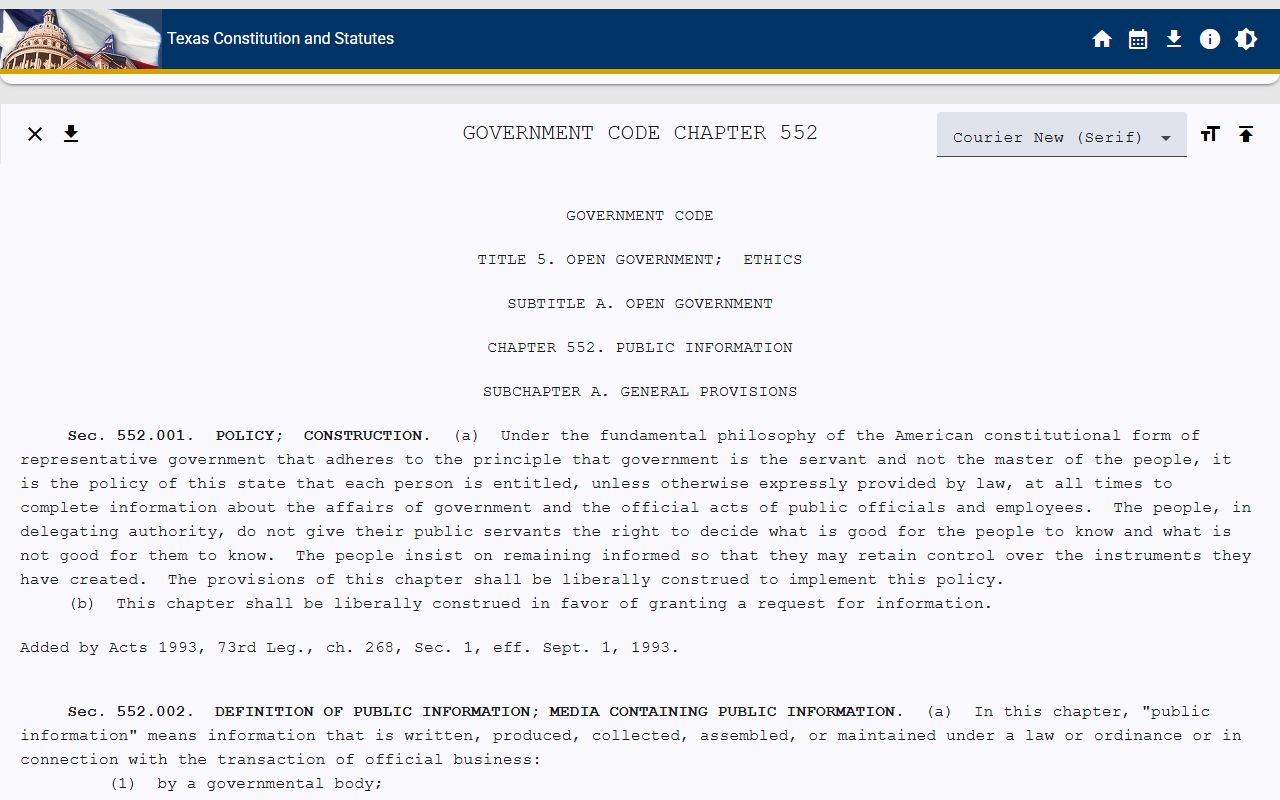
The Texas Public Information Act under Government Code Chapter 552 guarantees public access to booking records held by any government agency.
Under the Texas Public Information Act, Government Code Chapter 552, booking records are public. Any person can request them. You do not need to explain why.
Note: There may be a delay of several hours between an arrest and when the booking shows up in any online system. Contact the Hardeman County Jail for the most current information.
After a Booking in Hardeman County
Texas law under the Code of Criminal Procedure says every arrested person must appear before a magistrate within 48 hours of booking. At that hearing, the magistrate explains the charges, determines probable cause, and sets bond. The defendant also learns about their right to an attorney.
Bond can take a few forms. A cash bond means the defendant pays the full amount to the court. A surety bond involves a bail bondsman who posts the bond for a fee, usually around 10 percent. A personal recognizance bond lets the person go free on their promise to come back for court dates. Which option a person gets depends on the offense, their criminal history, ties to the community, and the judge's assessment of risk. More serious charges bring higher bonds. Capital cases sometimes have no bond set at all.
The 46th Judicial District handles felony cases in Hardeman County. Misdemeanor cases go through the county court. After charges are filed, all case records move to the clerk's office. Court filings, hearing dates, plea deals, and verdicts are tracked there and can often be found through re:SearchTX.
Court Records Linked to Hardeman County Bookings
A booking record tells you someone was arrested. A court record tells you what happened after. The Hardeman County District Clerk and County Clerk handle all criminal case files in Quanah. You can search their records by name or case number at the courthouse.
Online, re:SearchTX is the primary free tool for searching court records across Texas. The Office of Court Administration runs this portal and it pulls data from the statewide e-filing system. Type in a name and you can see case numbers, filing dates, charges, and current status. It is not the complete case file, but it covers the essentials and saves a trip to the courthouse.
The Texas Local Government Code provisions shown below define how county sheriffs must manage jail operations and maintain booking records.
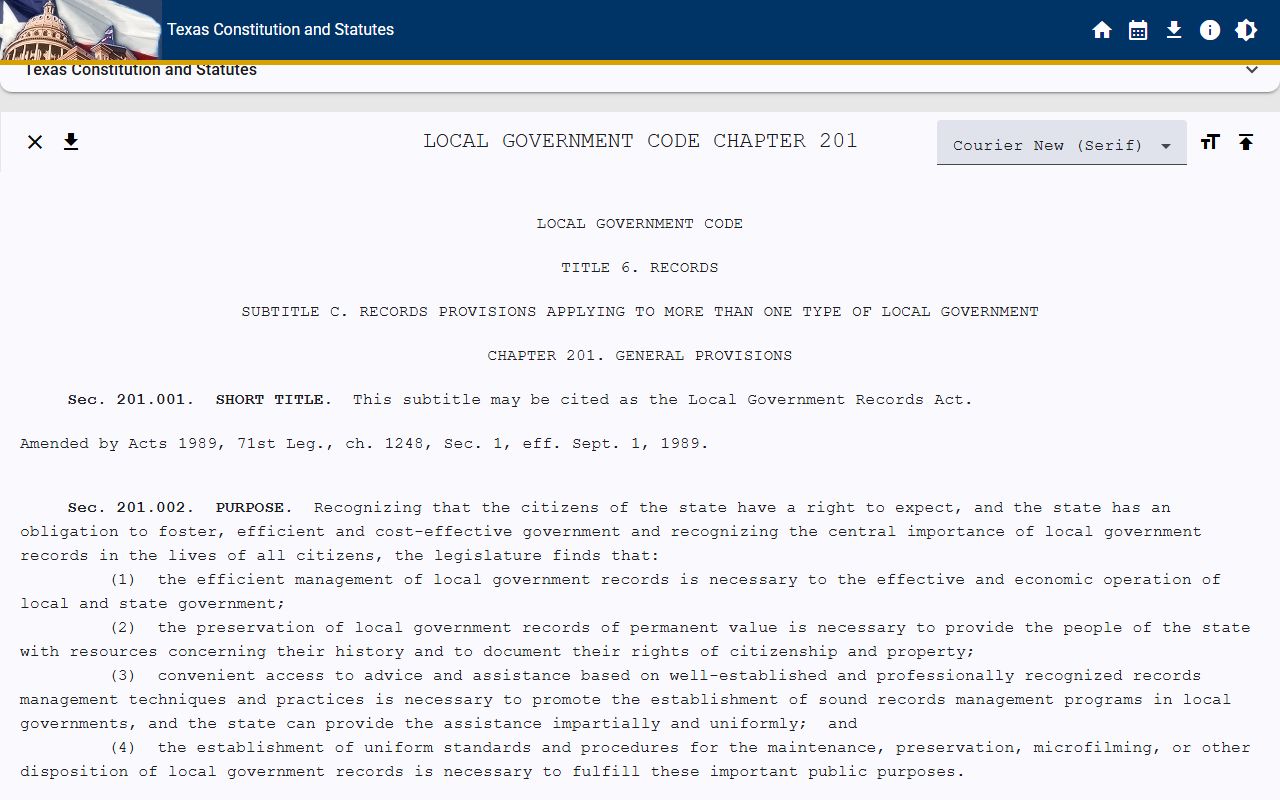
Under the Local Government Code Chapter 201, the sheriff is responsible for jail operations and the care of inmates in county custody.
Requesting Hardeman County Booking Records
Under the Texas Public Information Act, Government Code Chapter 552, you can request copies of any booking record held by the Hardeman County Sheriff's Office. No reason is needed. You can make the request by mail, in person, or by written submission to the office in Quanah.
Include the person's full name and the approximate date of arrest. The more details you provide, the faster the search goes. The sheriff's office has 10 business days to respond. Copy fees follow state rates: $0.10 per page for standard copies and $1.00 per page for certified copies. Section 552.108 allows agencies to withhold certain investigative details, but routine booking information such as name, charges, date of arrest, and bond amount is nearly always disclosed. When an agency denies a request, it must seek an opinion from the attorney general before doing so.
Types of Charges in Hardeman County Bookings
Booking records in Hardeman County list charges by their Texas Penal Code classification. Knowing the levels helps you understand the severity of what you find in a booking search.
Felonies are the most serious. A first degree felony carries 5 to 99 years and up to $10,000 in fines. Second degree is 2 to 20 years. Third degree is 2 to 10 years. State jail felonies range from 180 days to 2 years. Misdemeanors are less severe. Class A tops out at one year and $4,000. Class B is up to 180 days and $2,000. Class C carries only a fine up to $500 and does not result in a jail booking.
In Hardeman County, typical booking charges include DWI, drug offenses, assault, theft, and warrants. Each booking entry includes the statute section tied to the charge. That lets you look up the exact legal definition and penalty range in the Penal Code. The classification system is uniform statewide, so the rules are the same in Hardeman County as they are in any other Texas county.
Hardeman County Jail Standards and Oversight
Every county jail in Texas must meet standards set by the Texas Commission on Jail Standards. The Hardeman County Jail in Quanah is inspected regularly. TCJS reviews everything from booking procedures to medical services to facility conditions. These inspections are public record and can be requested from TCJS directly.
Under the Local Government Code Chapter 201, the sheriff has a legal duty to run the jail and maintain accurate records. This means booking data must be properly recorded and preserved. The same law that requires the sheriff to keep the records works alongside the Public Information Act, which says the public can access them. Both laws together ensure that Hardeman County booking records are reliable and available.
The TDCJ offender search tool shown below lets you track individuals who have moved from county custody to a state prison facility.
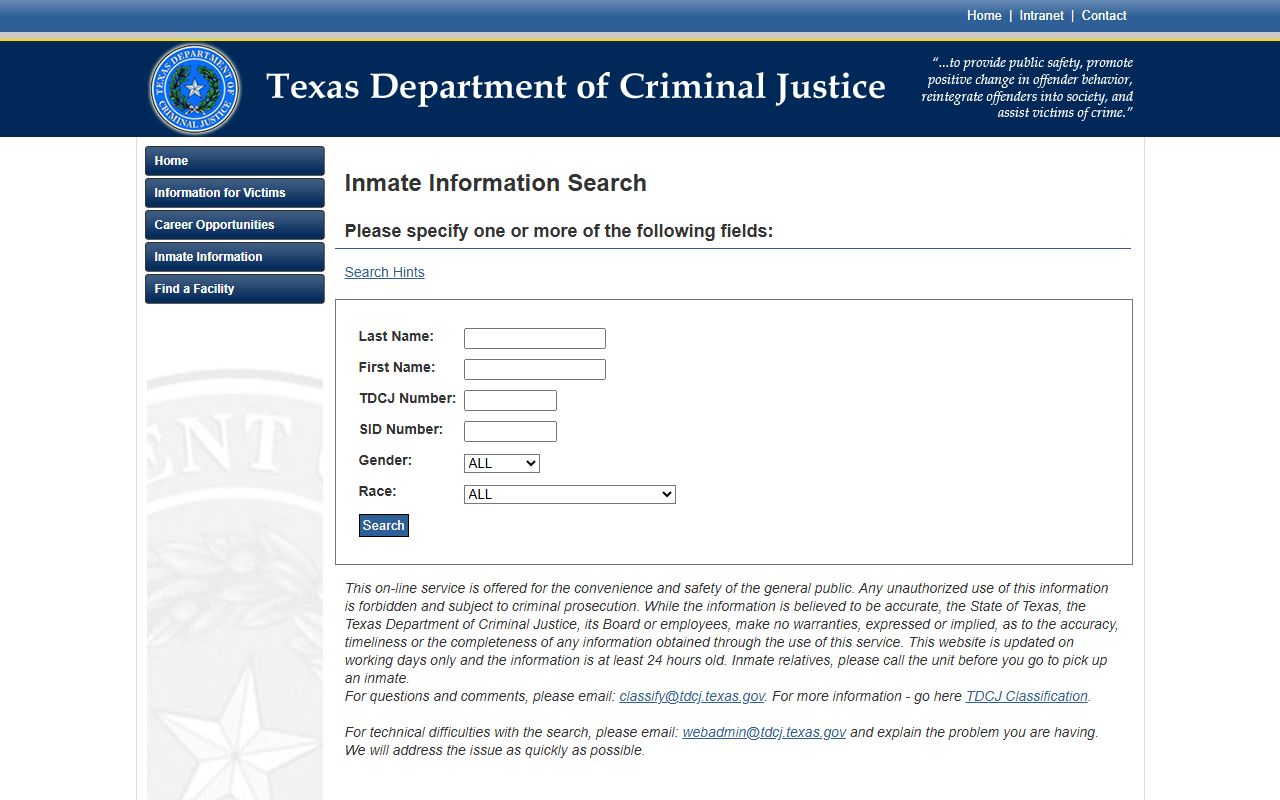
Through the TDCJ offender search, you can find current unit assignments, projected release dates, and offense details for convicted individuals.
Finding Legal Help in Hardeman County
If someone booked into the Hardeman County Jail cannot pay for a lawyer, they have the right to a court-appointed attorney. This right starts at the initial magistrate hearing. The defendant submits a financial affidavit, and if the court finds they are indigent, an attorney is appointed. The Texas Indigent Defense Commission tracks how each county handles this process.
Beyond criminal defense, legal aid groups can help with related civil issues. Protective orders, family court matters, and other needs that come up after an arrest can be handled through these organizations. The State Bar referral line connects people with private attorneys in the area.
- Court-appointed attorneys for indigent defendants in Hardeman County
- State Bar of Texas referral line at (800) 252-9690
- Regional legal aid organizations serving North TX
- Hardeman County courthouse resources in Quanah
- Texas Indigent Defense Commission for appointed counsel data
Nearby Counties
These counties border Hardeman County. Each has its own jail and booking system. Make sure you check where the arrest took place to find the right county records.