
Texas Recent Bookings
Texas recent bookings are public records that show who has been arrested and booked into county jails across the state. Each of the 254 Texas counties runs its own jail, and most post booking data through an online roster or search tool. You can look up recent bookings by name, date, or booking number in most cases. The Sheriff's Office in each county keeps these records and updates them on a regular basis. Some counties refresh their booking data every few hours. Others update once a day. If you need to find someone who was recently arrested in Texas, the county jail roster is the best place to start your search.
Texas Recent Bookings Overview
Where to Find Texas Recent Bookings
The Sheriff's Office in each Texas county is the main source for recent bookings. When someone gets arrested, the arresting agency brings them to the county jail for processing. The jail staff records the person's name, date of birth, charges, bond amount, and booking photo. That data goes into the jail management system. Most counties make this data public through an online inmate roster or search tool on the Sheriff's Office website.
Texas has a few state-level systems that also track booking and arrest data. The Texas Department of Criminal Justice runs an offender search for people in state prison. You can look up inmates by last name, TDCJ number, or SID number. The site updates on working days and the data is at least 24 hours old. For questions about the TDCJ search, email classify@tdcj.texas.gov.
The Texas Commission on Jail Standards monitors all 240 or more county jails in the state. They collect monthly population reports, track custody deaths, and inspect jails on a 24-month cycle based on a risk assessment that factors past incidents and compliance history. Texas county jails see about 1 million bookings per year according to TCJS data.
The re:SearchTX portal gives you access to court records across all 254 Texas counties. It is the largest state court e-filing system in the country. More than 39 million documents have been processed through the system. You can search by name or case number and filter by court type or case type. Public users can view basic case info for free.
Note: For the most current booking data, go straight to the county Sheriff's Office website. State-level systems may lag by a day or more.
Texas Recent Bookings State Resources
The Texas Department of Criminal Justice runs a statewide offender search at inmate.tdcj.texas.gov where you can look up people in state custody.
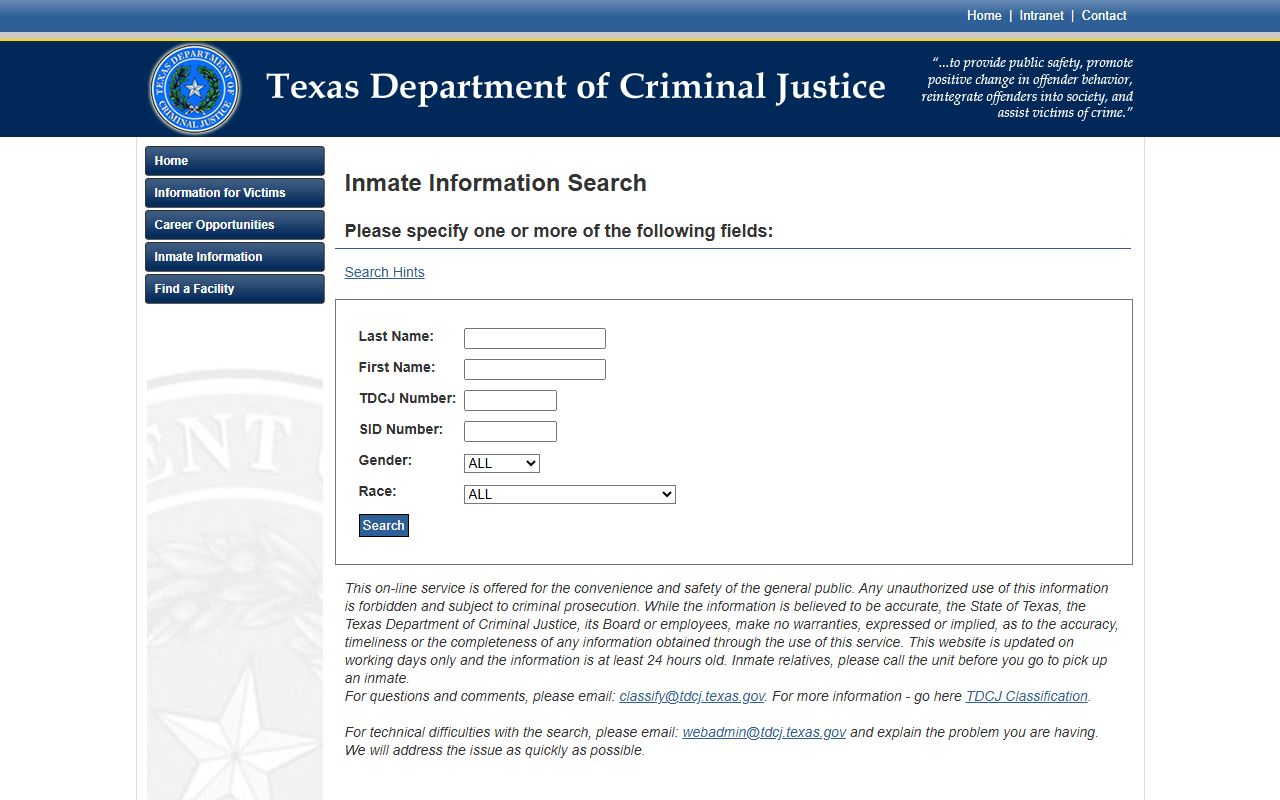
The TDCJ search needs a last name and first initial at minimum. It shows inmate location, offense details, and projected release dates.
The Texas Commission on Jail Standards is the only state agency that regulates county jails. Their site at tcjs.state.tx.us publishes jail population data and compliance reports.

TCJS data includes monthly population reports, incarceration rates, and staff turnover across all Texas county jails.
The re:SearchTX portal at research.txcourts.gov lets you search court records tied to recent bookings and criminal cases across the state.
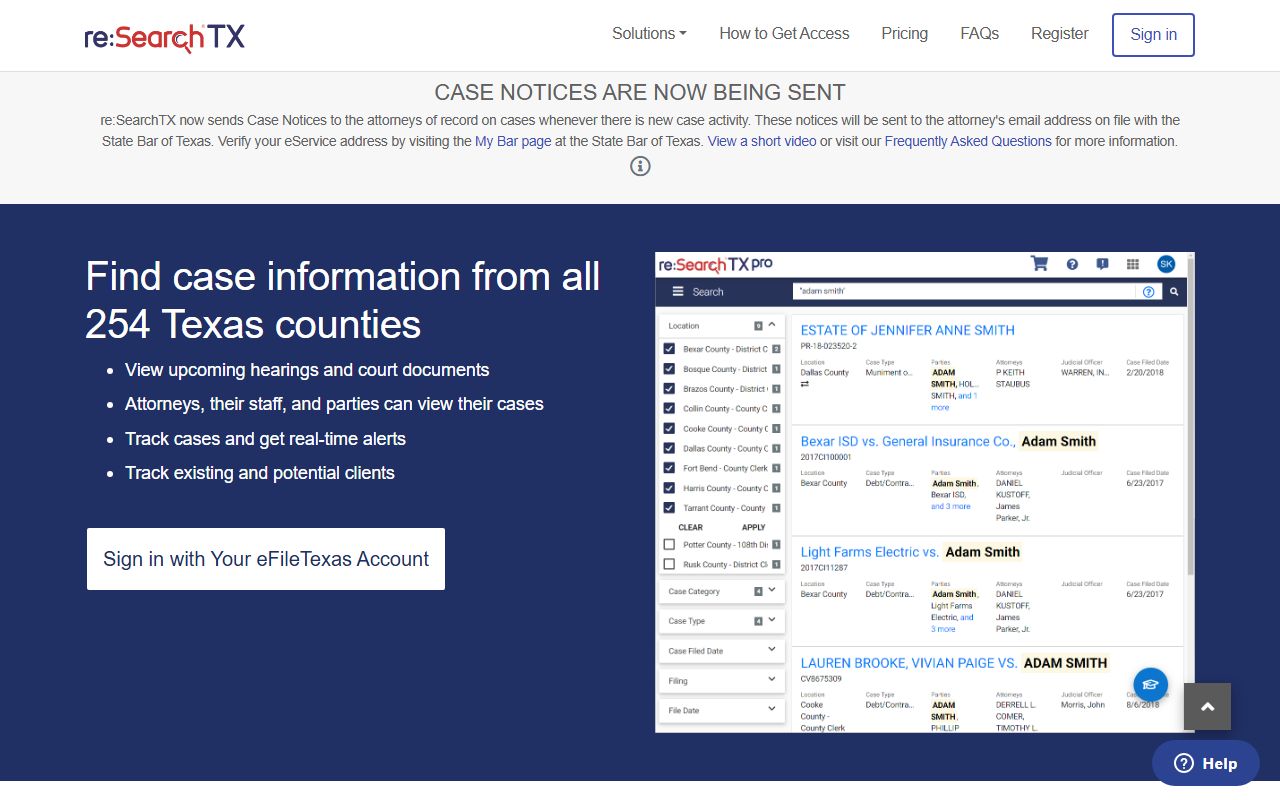
All 254 counties now e-file documents through this system. Nearly 255,000 registered users submit over 25,000 documents per day on average.
How to Search Recent Bookings in Texas
Start with the county. Figure out which county the arrest took place in. Then go to that county Sheriff's Office website and look for their inmate search or jail roster page. Most search tools let you type in a last name and pull up results right away. Some let you filter by date, race, sex, or booking number.
Each county runs its own system. Harris County uses the Justice Information Management System. Dallas County runs a jail lookup at dallascounty.org. Tarrant County posts results through their inmate search page. Bexar County publishes jail activity reports that show recent bookings. The tools vary, but the basic steps are the same everywhere.
If you want to search court records linked to an arrest, the re:SearchTX system covers all counties. Criminal e-filing is now mandatory statewide. You can search by defendant name or case number and see charges, court dates, and case status. Public users may pay about $0.10 per page to view filed documents.
Note: Some county jail rosters only show current inmates. Once a person bonds out or is released, their record may drop off the public roster within hours.
Texas Recent Bookings and Public Records Law
Booking records are public in Texas. The Texas Public Information Act under Government Code Chapter 552 says that government records are open to the public unless the law says otherwise. Arrest records, booking photos, and offense reports fall under this rule. You do not need to give a reason when you ask for these records.
There are limits. Under Section 552.108, law enforcement can hold back information that would interfere with an active investigation or endanger someone's safety. Basic booking data like name, date, charges, and bond amount stays public in almost all cases. Government bodies must respond to public information requests within 10 business days per Section 552.261.
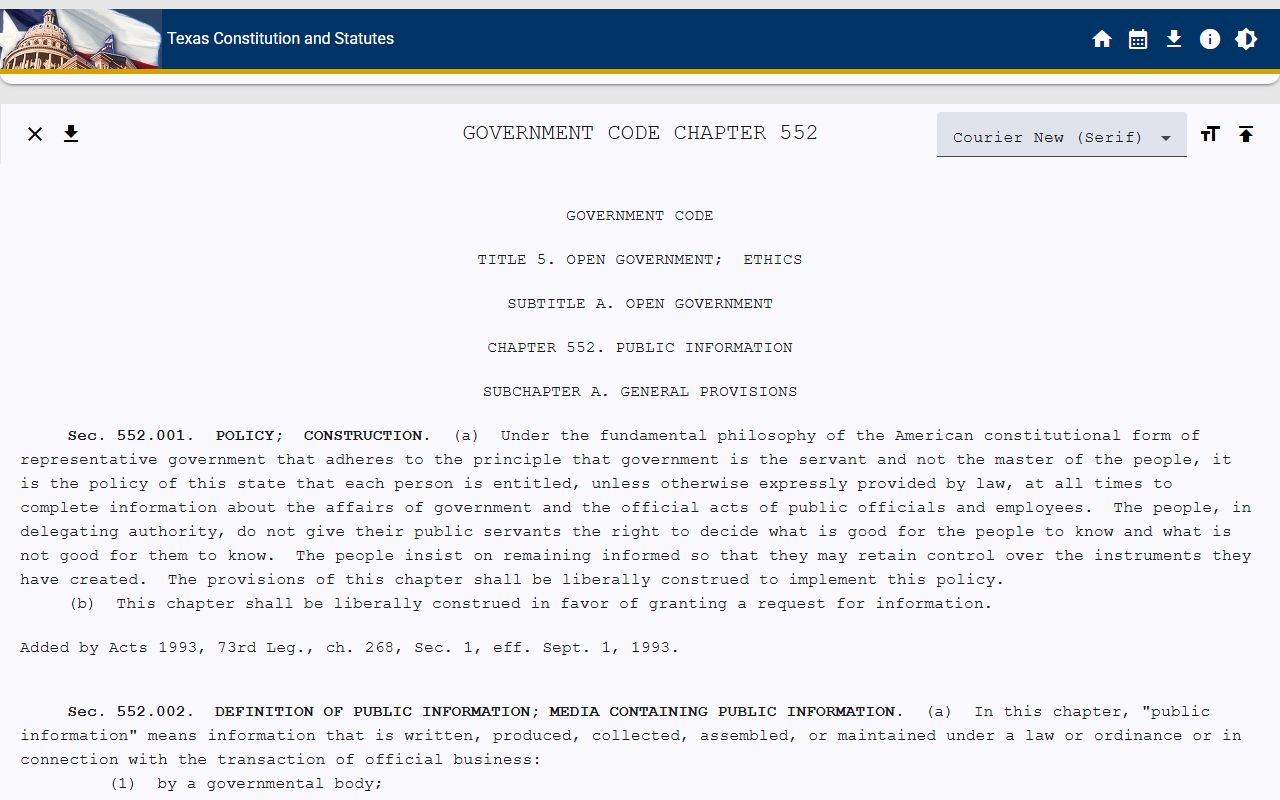
The full text of the Public Information Act is on the Texas Legislature site. It covers what is public, what can be held back, and what fees agencies can charge for copies.
The Texas Code of Criminal Procedure governs how arrests happen. Article 14.01 lets a peace officer arrest someone for a felony or public peace offense committed in the officer's view. Article 14.03 allows warrantless arrests when the officer has probable cause for a felony. After arrest, Article 15.17 requires the person to appear before a magistrate within 48 hours to hear the charges and their rights.
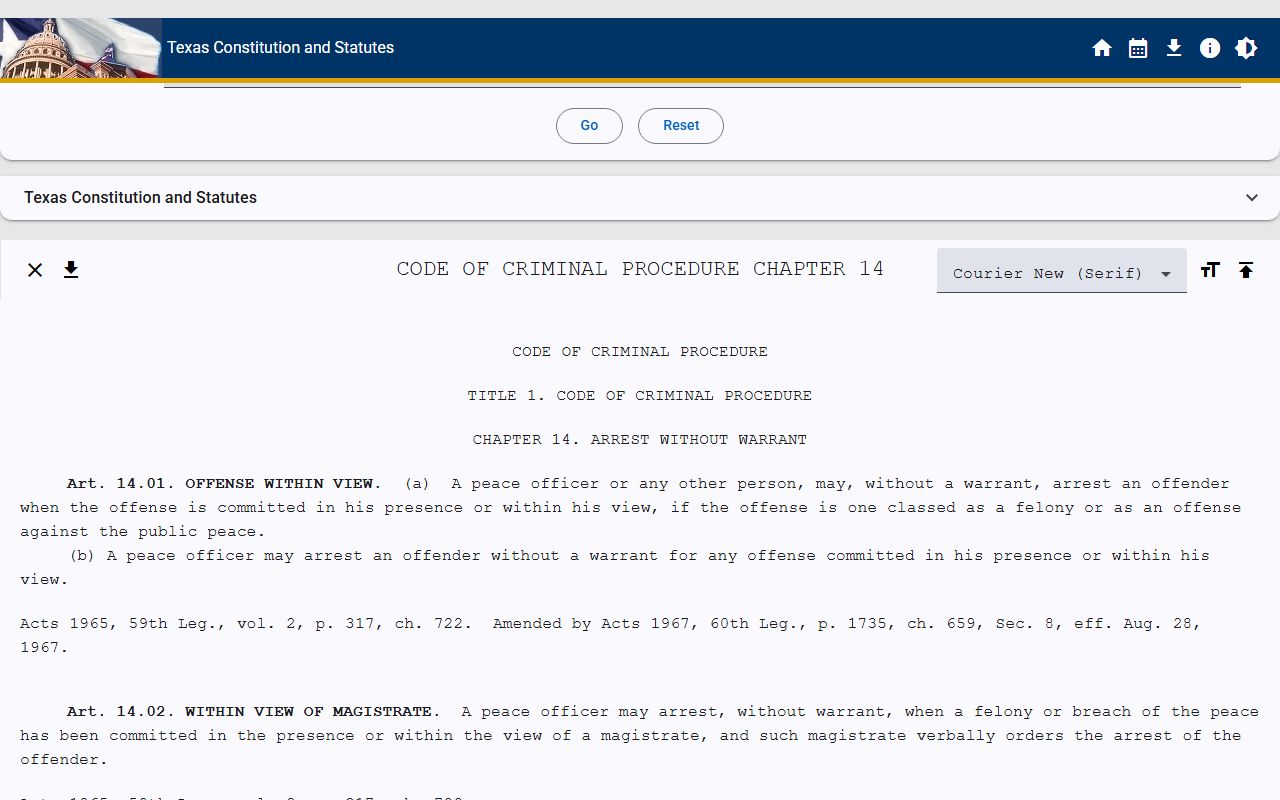
This section of the code spells out when officers can make arrests, what warrants must include, and how bail is set under Article 17.15.
Recent Bookings by Offense Type in Texas
Texas sorts criminal offenses into felonies and misdemeanors. Each class carries different jail time and fines. The Texas Penal Code lays out the full classification system. Knowing the offense class helps you understand what you see in recent bookings data.
Felonies range from capital offenses down to state jail felonies. A capital felony can mean life without parole. A first degree felony carries 5 to 99 years. Second degree is 2 to 20 years. Third degree is 2 to 10 years. State jail felonies carry 180 days to 2 years in a state jail facility. All felony classes can include fines up to $10,000.
Misdemeanors are less severe but still show up in recent bookings. Class A misdemeanors carry up to 1 year in county jail and a fine up to $4,000. Class B misdemeanors carry up to 180 days and a $2,000 fine. Class C misdemeanors are fine-only offenses capped at $500. Arresting agencies must report all arrests for Class B misdemeanors or higher to the Department of Public Safety for the statewide criminal history database.
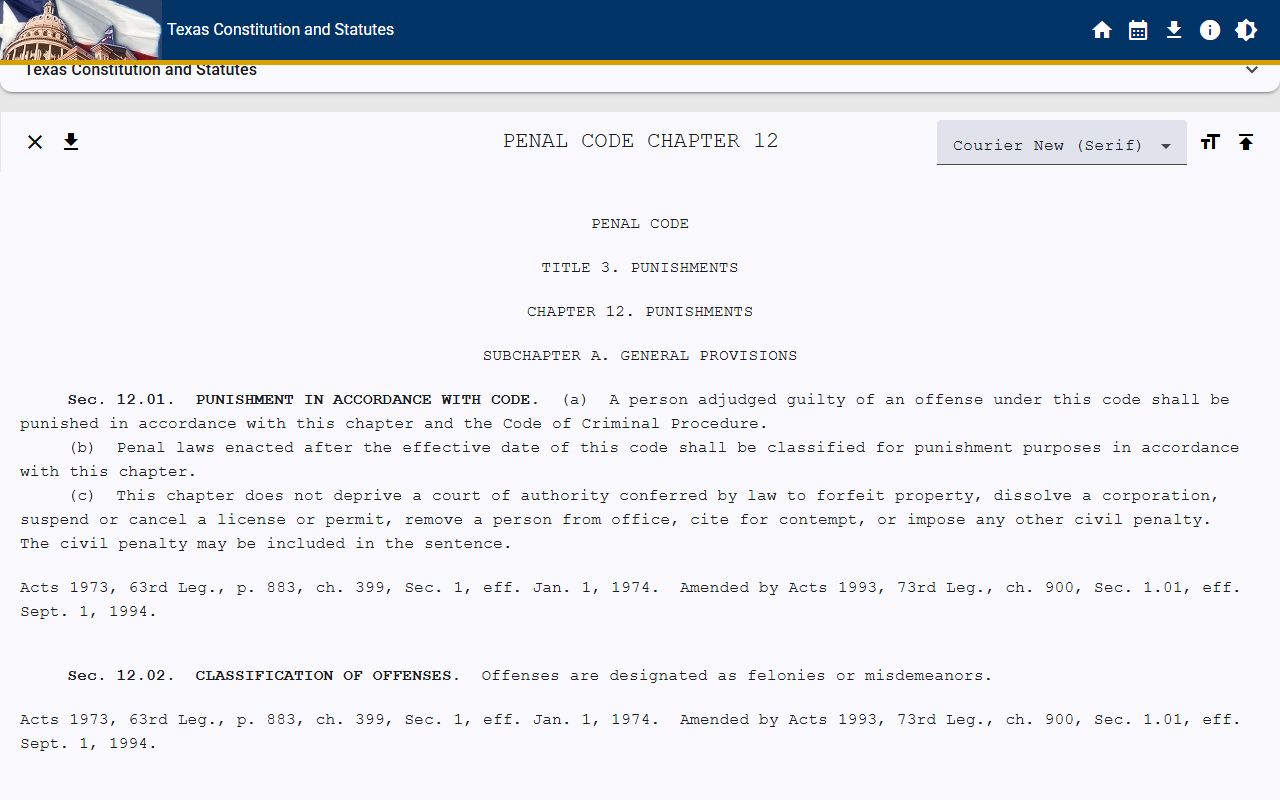
The Penal Code lists every offense class and its penalty range. Booking records in Texas typically show the specific charge along with the statute section.
How Long Texas Keeps Booking Records
The Texas Local Government Code sets rules for how long counties must keep records. Booking records stay on file for 5 years after the person is released. Felony offense reports must be kept for 75 years. Other misdemeanor reports are held for 10 years. Class C misdemeanor reports are kept for 5 years. Fingerprint cards and photos go to DPS and stay on file permanently.
Court records follow their own schedule. Misdemeanor case records are kept for 12 years after the case closes. Felony case records are held for 25 years. Capital felony cases have permanent retention. Each county designates a records management officer who oversees these schedules. The Texas Judicial Branch through the Office of Court Administration manages statewide court databases and produces annual reports on court activity.
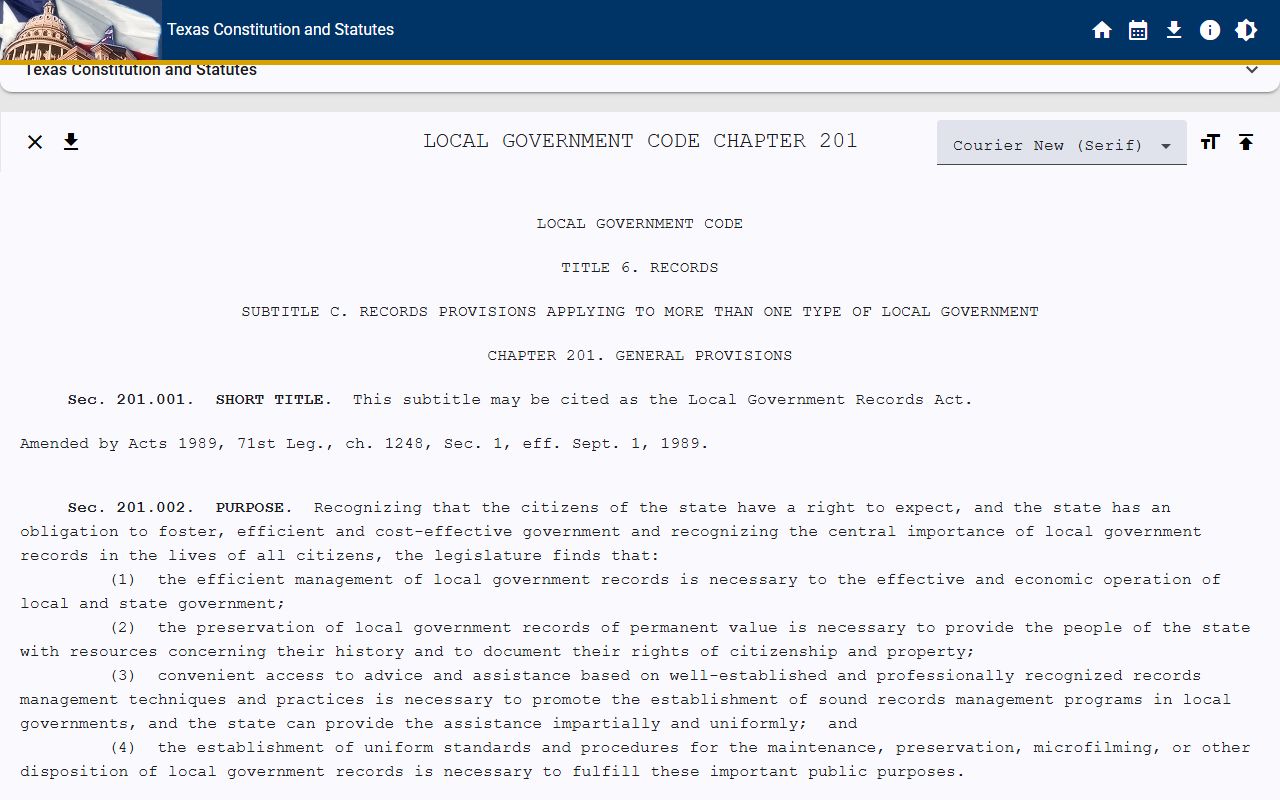
Local Schedule PS governs how long law enforcement agencies keep arrest and booking records. Counties must follow these timelines.
Texas Recent Bookings and Criminal History
The DPS Crime Records Service at records.txdps.state.tx.us runs the Computerized Criminal History database. It holds arrest, prosecution, and disposition data for Class B misdemeanors and above. Arresting agencies must report to DPS within seven days of an arrest. Each name-based search costs $3.00, and the fee applies even when no match is found. Credit card payments add $0.25 plus 2.5% of the total.
To search, you create an account, buy credits, and enter a first and last name. You can add a middle name, maiden name, or date of birth for better results. The Error Resolution Unit at DPS handles corrections to criminal history records. You must work through the arresting agency to start that process. They send written notice on official letterhead along with supporting documents to DPS at P.O. Box 4143, Austin, TX 78765-4143.
The Texas Indigent Defense Commission tracks how counties handle people who cannot afford a lawyer after being booked. About 70% of defendants in Texas courts qualify for appointed counsel. County spending on indigent defense exceeds $300 million each year.

TIDC sets standards for attorneys who represent defendants who cannot pay for their own lawyer. They also track caseloads and costs across all 254 counties.

The Office of Court Administration supports the entire Texas court system. They manage re:SearchTX, maintain protective order registries, and publish annual statistical reports.
Browse Texas Recent Bookings by County
Each of the 254 Texas counties runs its own jail and posts recent bookings through the Sheriff's Office. Pick a county below to find local booking search tools, jail contact info, and public records resources.
Recent Bookings in Major Texas Cities
City police departments make arrests, but booking records are kept at the county jail. Pick a city below to find out which county handles bookings for that area and how to search for recent arrests.