
Denton County Recent Bookings
Recent bookings in Denton County are kept by the Sheriff's Office at the county jail in Denton. The jail processes all arrests made by local police in cities like Denton, Lewisville, and Flower Mound, plus cases handled by deputies and state troopers within county lines. Booking data includes the person's name, charges, bond amount, and a booking photo. The Sheriff's Office posts this info through an online inmate search tool that gets updated throughout the day. You can also check court records through the Denton County District Clerk for case details tied to an arrest.
Denton County Overview
Denton County Sheriff's Office Recent Bookings
The Denton County Sheriff's Office runs the county jail and keeps all booking records. When a person is arrested anywhere in Denton County, they go to the jail for intake. Staff take a photo, record the charges, and enter everything into the jail management system. That data feeds the public inmate search.
The jail sits at 127 N. Woodrow Lane in Denton. It has a capacity for over 1,500 inmates. The Sheriff's Office website lists an inmate search tool where you can look up people by name. Results show the booking date, charges, bond amount, and custody status. The roster updates multiple times per day, so new bookings show up fairly fast.
You can reach the jail at (940) 349-1700 for questions about a booking or an inmate's status. The jail lobby is open 24 hours for bonding. Visits follow a set schedule that changes based on the housing unit. Check the Sheriff's Office site for the most current visit times.
| Office | Denton County Sheriff's Office |
|---|---|
| Jail Address |
127 N. Woodrow Lane Denton, TX 76205 |
| Phone | (940) 349-1700 |
| Lobby | Open 24 hours for bonding |
How to Search Recent Bookings in Denton County
Start at the Sheriff's Office website. The inmate search page lets you type in a last name and pull up current inmates. You can add a first name to narrow things down. Results show charges, bond info, and booking dates.
One thing to keep in mind is that most jail rosters only show people who are still in custody. Once someone posts bond or gets released, their record may drop off the public list within hours. If you are looking for someone who was booked and then released the same day, the online roster might not have them anymore. In that case, you can call the jail or file a public records request under the Texas Public Information Act to get the data you need.
For court records tied to a booking, use the Denton County District Clerk search. The District Clerk keeps all criminal case files. You can search by defendant name or case number to find charges, court dates, and dispositions. The office is at the Denton County Courts Building on West Hickory Street in Denton.
The statewide re:SearchTX portal also covers Denton County. All Texas counties now e-file through this system. You can search for criminal cases, view docket entries, and check case status. Public users can see basic info for free. Filed documents may cost about $0.10 per page to view.
Denton County Booking Records Resources
The Denton County District Clerk's website at dentoncounty.gov is where you find court records linked to recent bookings and criminal cases in the county.
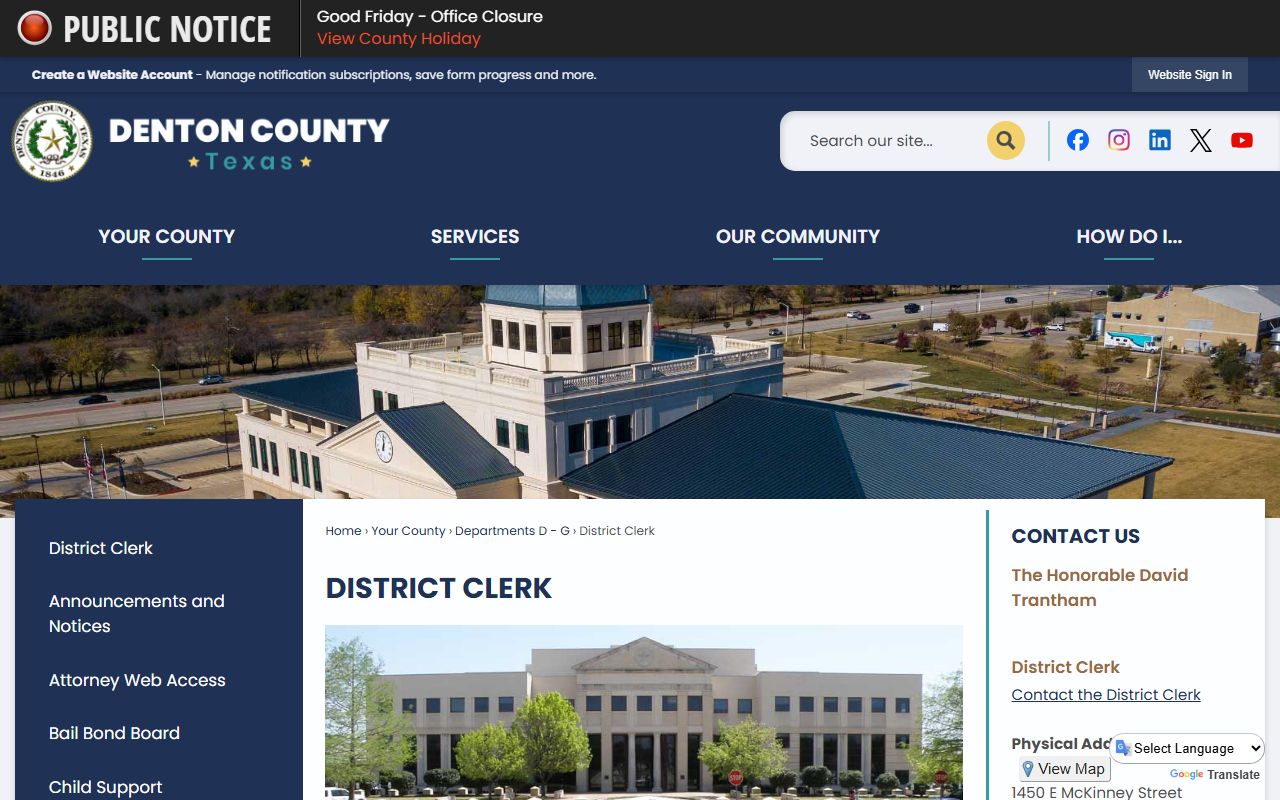
The District Clerk handles filings for all district courts in Denton County, including criminal, civil, and family cases. You can search their records online or visit in person at the courthouse.
At the state level, the Texas Commission on Jail Standards at tcjs.state.tx.us tracks jail population data and compliance for the Denton County jail along with all other county jails in the state.

TCJS inspects county jails on a regular cycle and publishes monthly reports on inmate population, capacity, and incidents. Denton County must meet all state standards for inmate housing and care.
Public Access to Denton County Recent Bookings
Booking records are public in Texas. The Texas Public Information Act under Government Code Chapter 552 makes government records open to anyone unless a specific exception applies. Arrest records, booking photos, and offense reports are all public. You do not need to give a reason to ask for them.
To file a request with Denton County, you can write to the Sheriff's Office or the District Clerk. Put your request in writing. Include the person's name and approximate date of the booking if you know it. The county has 10 business days to respond under Section 552.261. They can charge for copies, but the basic info is free to view in most cases.
Some records do have limits. Under Section 552.108, law enforcement can hold back info that would hurt an active case or put someone at risk. But the basic booking data, the name, date, charges, and bond, stays public almost always. Juvenile records are sealed. So are some records tied to family violence cases where a protective order is in place.
How the Booking Process Works in Denton County
When someone is arrested in Denton County, the arresting officer brings them to the county jail for processing. This is called booking. It happens regardless of whether the arrest was made by a city police officer, a county deputy, or a state trooper. All arrests within the county get processed at the same jail.
The Texas Code of Criminal Procedure governs how arrests work. Article 14.01 says a peace officer can arrest someone for a felony or a breach of the peace committed in the officer's presence. Article 14.03 allows warrantless arrests when there is probable cause for a felony. Once arrested, the person must appear before a magistrate within 48 hours under Article 15.17. The magistrate explains the charges and sets bail.
During booking, jail staff collect basic information. They take a photo, record fingerprints, and log the charges. They check for outstanding warrants in other counties or states. They also check for immigration holds and medical needs. All of this goes into the booking record. The bond amount depends on the charge. Denton County uses a bond schedule, but a magistrate can adjust the amount based on the facts of the case.
After booking, the data shows up in the jail management system. That is what feeds the online inmate search. Family members can check the roster to see if someone was booked and what the charges and bond amount are. If the person bonds out quickly, the record may only be on the public roster for a short time.
Recent Bookings and Offense Classes in Denton County
The Texas Penal Code sets out the offense classes you will see in Denton County recent bookings. Felonies are the most serious. Capital felonies can mean life without parole. First degree felonies carry 5 to 99 years in prison. Second degree is 2 to 20 years. Third degree is 2 to 10 years. State jail felonies carry 180 days to 2 years in a state jail facility. All felony classes can include fines up to $10,000.
Misdemeanors are less severe but still show up in bookings. Class A is up to 1 year in county jail and a $4,000 fine. Class B is up to 180 days and $2,000. Class C is fine only, capped at $500, and people usually get a citation instead of going to jail for those. Most DWI first offenses in Denton County come in as Class B misdemeanors. Assault charges vary based on the facts. Theft charges depend on the dollar amount.
Denton County sees a mix of offenses. Drug charges, DWI, assault, theft, and warrant arrests make up a big chunk of daily bookings. Property crimes tend to spike in areas near shopping centers and along the I-35 corridor. The county has grown fast in the last decade, and the jail population has grown with it.
How Long Denton County Keeps Booking Records
The Texas Local Government Code sets rules for how long counties hold on to records. Booking records must be kept for 5 years after the person is released from custody. Felony offense reports are held for 75 years. Other misdemeanor reports stay on file for 10 years. Class C reports are kept for 5 years.
Fingerprints and booking photos go to the Department of Public Safety and stay on file permanently. Court records have their own retention schedule. Misdemeanor case files are kept for 12 years after the case ends. Felony case files are held for 25 years. Capital felony records are permanent.
If you need an old booking record from Denton County, you can file a request with the Sheriff's Office. For court records, go through the District Clerk. Records that are past the online roster's display window can still be pulled from the jail management system if they fall within the retention period.
State Resources for Denton County Booking Searches
If someone arrested in Denton County ends up in state prison, you can track them through the Texas Department of Criminal Justice offender search. TDCJ runs the state prison system. Their search tool shows the inmate's unit, offense, sentence length, and projected release date. You need a last name and first initial at minimum.
The Texas Indigent Defense Commission tracks how Denton County handles people who cannot afford a lawyer after arrest. About 70% of defendants in Texas courts qualify for appointed counsel. TIDC sets standards for court-appointed attorneys and monitors caseloads across all 254 counties. Denton County has a managed assigned counsel program that distributes cases to qualified private attorneys.
The DPS Crime Records Service runs the statewide criminal history database. Every arrest for a Class B misdemeanor or above in Denton County gets reported to DPS within seven days. A name-based search of this database costs $3.00. You can run searches through the DPS website. The fee applies even when no record is found.
Cities in Denton County
Denton County has several cities whose police departments make arrests that get processed at the county jail. All booking records end up with the Sheriff's Office no matter which agency made the arrest.
Other communities in Denton County include Little Elm, Corinth, The Colony, Argyle, Aubrey, Sanger, Krum, and Lake Dallas. All arrests in these areas go through the Denton County jail.
Nearby Counties
These counties border Denton County. If you are not sure which county handled a booking, check the address where the arrest took place. Each county runs its own jail and keeps its own records.